
SEO for Beginners: How to Do SEO Yourself, for Free
Discover effective methods of SEO in this step-by-step guide for beginners, empowering you to optimize your website for free in 2026.
methods of seo | Updated October 2026 | hyperank Editorial Team | A few hours a week | Beginner
SEO (search engine optimization) is the practice of improving your website so it appears higher in search results for the searches your customers make, bringing in free, organic traffic. The main methods of SEO are technical SEO (making your site crawlable and fast), on-page SEO (optimizing each page's content and structure), off-page SEO (earning links and mentions elsewhere) and content (publishing pages that genuinely answer searchers' questions). You can do SEO yourself, and for free, with Google Search Console and a bit of consistent effort. This guide, SEO for Beginners: How to Do SEO Yourself, for Free, explains why SEO matters, how it compares with Google Ads, the 80/20 rule, free ways to learn, and how long results take.
SEO isn't a trick you apply once. It's the habit of making your site the most useful, accessible answer to what people search for.
What You'll Learn
Here's the short version. Set up Google Search Console, fix anything that stops Google crawling and indexing your pages, pick a handful of topics your customers search for, write one genuinely helpful page per topic with a clear title and headings, link your pages together, and earn a few mentions from relevant sites. Then check Search Console monthly and improve what's working. Expect months, not days, before meaningful results.
- The basics: What SEO is and why it matters.
- The methods: Technical, on-page, off-page and content.
- The choices: SEO vs paid search, and doing it yourself.
- The shortcuts: The 80/20 rule and free learning resources.
- The timeline: What research says about how long SEO takes.
The Process at a Glance
| Step | Action | Time | Outcome |
|---|---|---|---|
| 1 | Understand what SEO is | 10 minutes | Clear foundations |
| 2 | Know why SEO is important | 5 minutes | A reason to invest time |
| 3 | Learn the main methods of SEO | 30 minutes | A checklist to work through |
| 4 | Compare SEO with paid search | 10 minutes | The right channel mix |
| 5 | Start doing SEO yourself for free | 2 to 4 hours | Search Console set up, first fixes made |
| 6 | Apply the 80/20 rule | 30 minutes | Focus on what matters most |
| 7 | Learn SEO for free | Ongoing | Growing skills |
| 8 | Set realistic timelines | 5 minutes | Patience and the right metrics |
| 9 | Get quick answers | 5 minutes | Common questions covered |
Step 1: Understand What SEO Is in Digital Marketing
In digital marketing, SEO is the channel that earns traffic from search engines without paying per click. It works by helping search engines find, understand and trust your pages, so they show them to people searching for related topics. Google's own SEO Starter Guide describes it as helping search engines understand your content and helping users find your site.
- Search engines: Google is the largest, but Bing and others matter too; see what a search engine is.
- Organic results: The unpaid listings below or around the ads.
- Keywords: The words and questions people type; see what SEO keywords are.
- AI answers: SEO now also influences whether AI Overviews and assistants like ChatGPT mention or cite you.
How search engines work in three steps
| Stage | What happens | What you can do |
|---|---|---|
| Crawling | Bots discover your pages | Link pages together; submit a sitemap |
| Indexing | Pages are analyzed and stored | Write clear, unique content |
| Ranking | Pages are ordered for each search | Be the most helpful, trusted answer |
Step 2: Know Why SEO Is Important
SEO is important because search is where many buying journeys start, and organic traffic keeps arriving after the work is done, unlike paid ads that stop when the budget does. A page that ranks well can bring visitors for years.
- Long-term traffic: Good pages keep attracting visitors without ongoing ad spend.
- High intent: People searching for a solution are often ready to act.
- Trust: Many users see organic results as more credible than ads.
- Compounding returns: Each strong page makes the next one easier to rank through internal links and authority.
- AI visibility: Pages that rank and are well structured are more likely to be used in AI answers.
Step 3: Learn the Main Methods of SEO
The four main methods of SEO are technical SEO, on-page SEO, off-page SEO and content. You need all four, but beginners usually get the fastest gains by fixing technical basics and improving on-page content.
| Method | What it covers | Beginner tasks |
|---|---|---|
| Technical SEO | Crawling, indexing, speed, mobile, security | Set up Search Console, submit a sitemap, fix broken pages |
| On-page SEO | Titles, headings, content, internal links, images | Write clear titles and meta descriptions; use descriptive headings |
| Off-page SEO | Links, mentions, reviews, reputation | Get listed in relevant directories; earn mentions from partners |
| Content | Pages that answer searchers' questions | Publish one helpful page per important topic |
Technical SEO
Technical SEO makes sure search engines can access and understand your site. Start with our guide to what technical SEO is and use the technical SEO audit checklist when you're ready to go deeper.
On-page SEO and content
On-page SEO and content work together: a page needs to answer the search clearly and be structured so search engines understand it. Our guide to SEO content writing covers how to write pages that rank and get cited by AI.
Off-page SEO
Off-page SEO builds your site's reputation through links and mentions from other websites. See our off-page SEO guide for safe, practical tactics.
Step 4: Compare Organic SEO With Paid Search
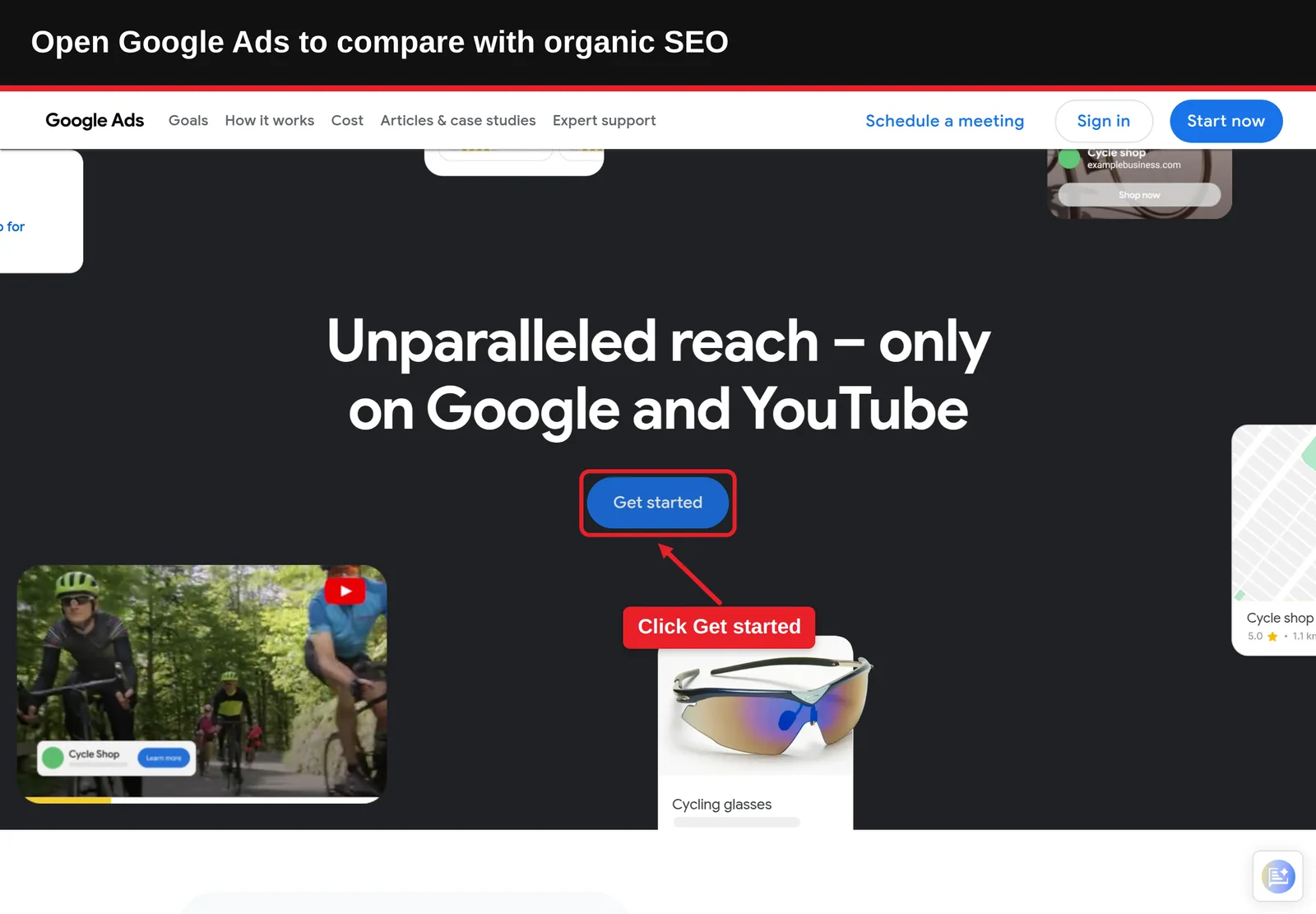
SEO isn't automatically better than Google Ads; they do different jobs. Paid search brings traffic immediately but stops when you stop paying, while SEO takes longer but can keep delivering free traffic. Many businesses use both.
| Factor | Organic SEO | Google Ads |
|---|---|---|
| Cost per click | None (you pay in time or content) | You pay for each click |
| Speed | Months | Same day |
| Lasting effect | Continues after the work | Stops when spending stops |
| Control | Indirect | Direct over keywords, budgets, timing |
| Best for | Long-term growth and trust | Quick tests, promotions, competitive terms |
- Use Ads to learn: Paid data can show which keywords convert before you invest in SEO content.
- Use SEO to compound: Over time, organic traffic can lower your reliance on paid clicks.
Step 5: Do SEO Yourself, for Free
Yes, you can do SEO yourself, and the core tools are free. What it costs is time: a few focused hours a week is enough for many small sites to make steady progress.
A free starter plan
- Set up Google Search Console: Verify your site at Search Console to see which searches bring visitors and which pages have problems.
- Submit your sitemap: Help Google find all your important pages.
- Check indexing: Make sure key pages are indexed and not blocked.
- Pick five topics: Choose questions your customers actually ask.
- Improve or create five pages: One clear, helpful page per topic, with a good title and headings.
- Link pages together: Add internal links between related pages.
- Get listed: Add your business to Google Business Profile if you serve a local area.
Writing your first optimized page
- Choose one question: For example, "how to clean suede shoes" for a shoe-care store.
- Check what ranks: Search it and note what the top results cover and what they miss.
- Answer it first: Put a clear, direct answer in the opening paragraph.
- Add what others lack: Your own photos, steps, product knowledge or customer tips.
- Use a clear title: Include the main phrase naturally, such as "How to Clean Suede Shoes (Without Ruining Them)."
- Link it: Link to it from related pages and link from it to relevant products or guides.
Free tools to use
| Tool | What it's for |
|---|---|
| Google Search Console | Search performance and indexing issues |
| Google PageSpeed Insights | Page speed and Core Web Vitals |
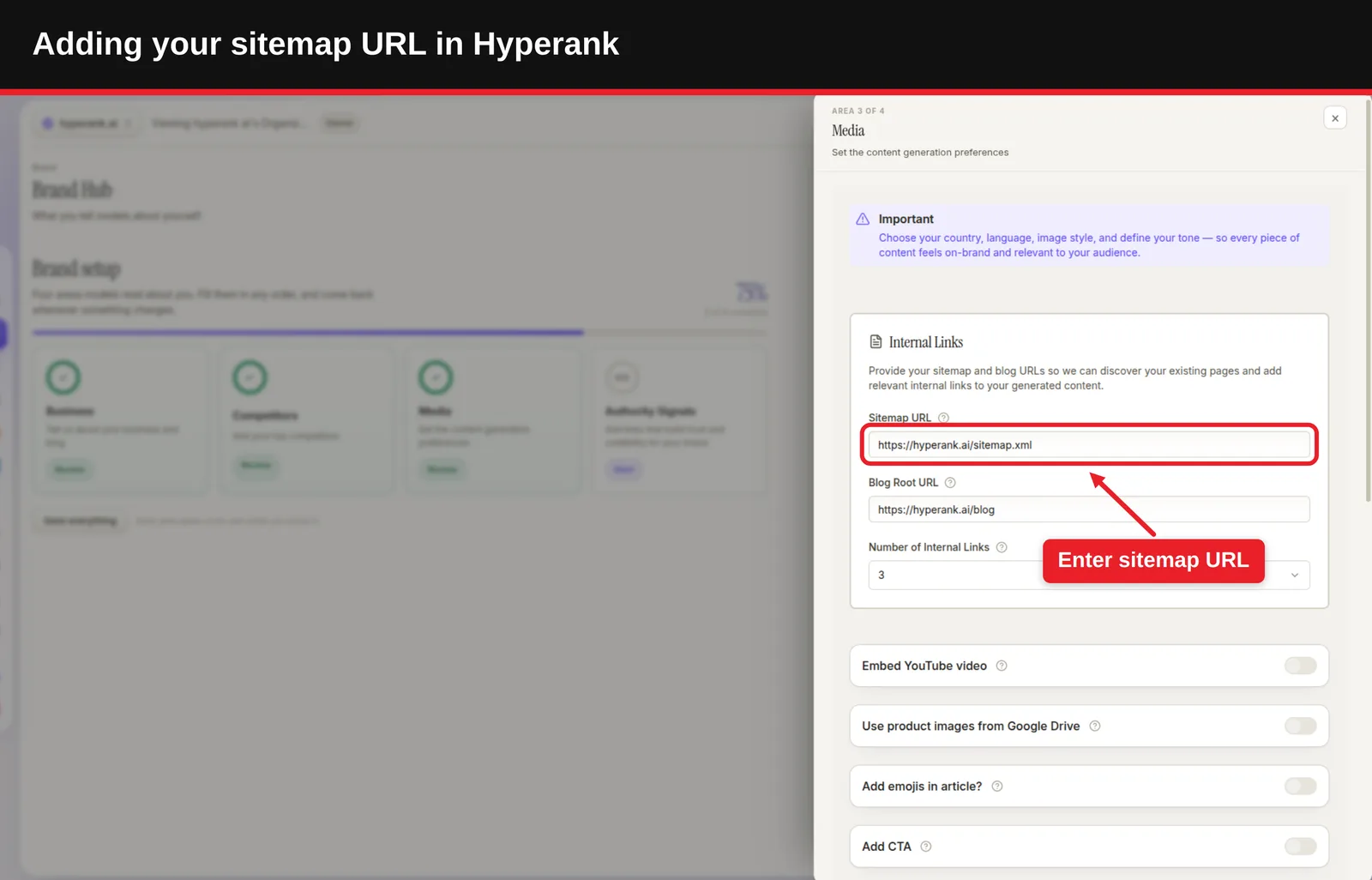
| hyperank free tools | On-page checks, robots.txt, sitemaps, schema and AI visibility checks |
| Google Keyword Planner | Keyword ideas and rough volumes |
As you grow, you may add paid tools, but they're not required to start. To see whether AI assistants mention your brand, hyperank tracks what ChatGPT, Perplexity, Gemini and other engines say about you.
Step 6: Apply the 80/20 Rule in SEO
The 80/20 rule, or Pareto principle, suggests a small share of your efforts produces most of your results. In SEO, that usually means a few pages drive most of your traffic, and a few tasks drive most of your gains, so focus there first.
- Find your top pages: In Search Console, sort pages by clicks; the top handful often bring most visits.
- Improve them first: Update content, titles and internal links on your best pages before writing new ones.
- Fix big blockers: Indexing issues, broken pages and slow templates affect many pages at once.
- Target near-wins: Pages ranking in positions 5 to 15 can often move up with modest improvements.
- Skip low-value busywork: Endless tweaks to minor pages rarely pay off.
Key Takeaway: Before creating anything new, improve the pages that already get impressions.
Common beginner mistakes
- Chasing huge keywords: Broad terms are dominated by established sites; specific questions are easier to win.
- Thin pages: Short pages that don't fully answer the question rarely rank.
- Ignoring Search Console: It's the best free source of data about how Google sees your site.
- Buying links: Paid link schemes risk penalties and rarely help long term.
- Changing too much at once: Make a few changes, then wait a few weeks so you can see what worked.
Step 7: Learn SEO for Free
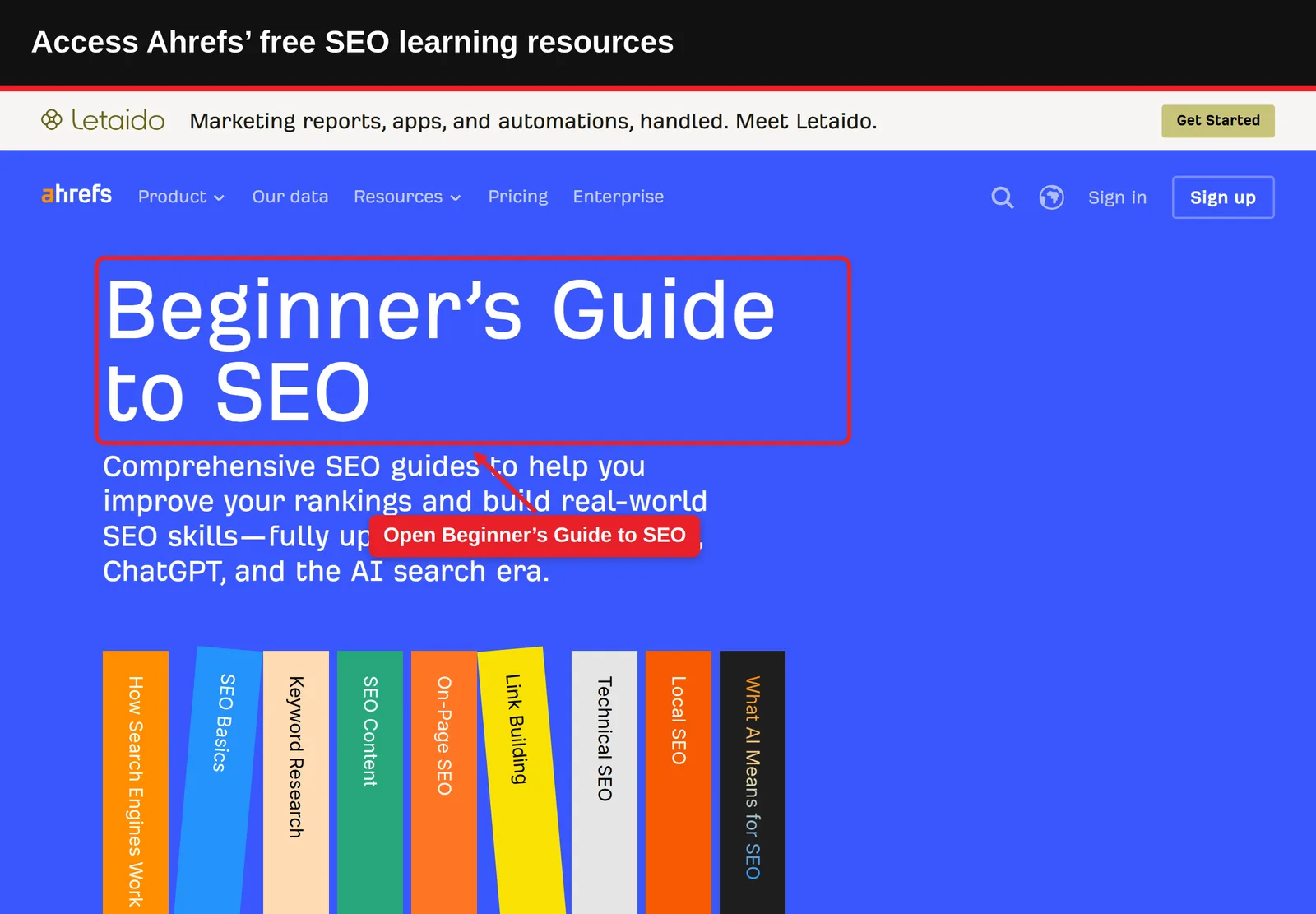
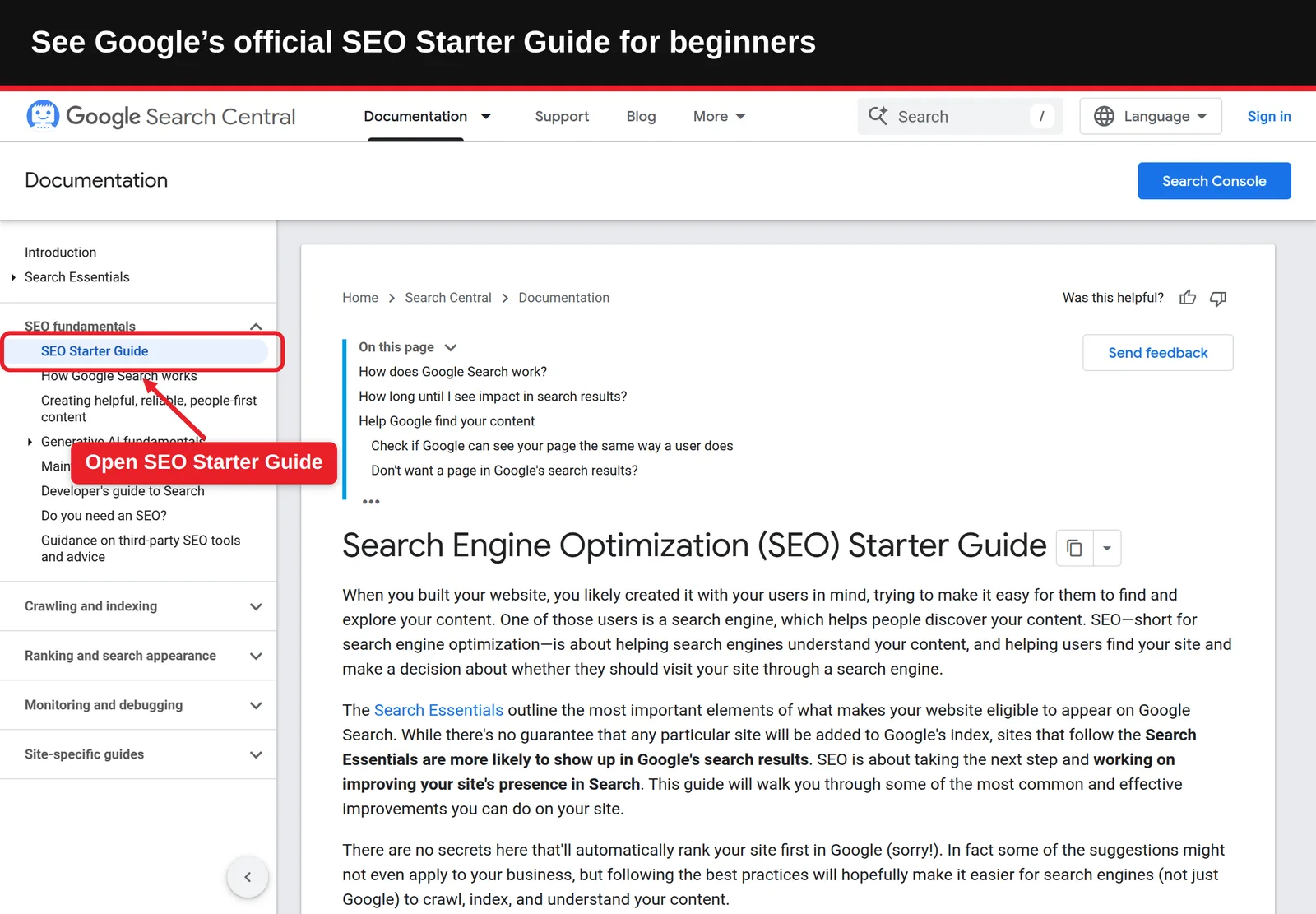
You can learn SEO for free from search engines' own documentation and reputable free courses. Start with Google's guides, then add practical courses and practice on your own site.
| Resource | Type | Good for |
|---|---|---|
| Google SEO Starter Guide | Official documentation | Fundamentals straight from Google |
| Google Search Central documentation | Official documentation | Technical details and policies |
| Moz Beginner's Guide to SEO | Free guide | Structured introduction |
| HubSpot Academy | Free courses | SEO and content marketing basics |
| Our Google SEO Starter Guide summary | Summary | Quick overview including AI features guidance |
Learn by doing
The fastest way to learn SEO is to work on a real site. Pick one page, improve it, and watch its impressions and clicks in Search Console over the following weeks. Keep a simple log of what you changed so you can connect actions to results.
Step 8: Set Realistic Expectations for How Long SEO Takes
SEO usually takes months to show meaningful results, and competitive topics can take a year or more. An Ahrefs study of two million pages found that only 5.7% of the pages it tracked reached Google's top 10 within a year for at least one keyword, which shows how competitive ranking can be.
| Factor | Faster results | Slower results |
|---|---|---|
| Competition | Niche or local topics | Broad, high-volume keywords |
| Site history | Established, trusted site | Brand-new domain |
| Starting point | Fixing technical blockers on an existing site | Building from scratch |
| Content quality | Clearly better than what ranks | Similar to existing pages |
- Early signals: Rising impressions in Search Console often appear before clicks.
- No promises: Be wary of anyone guaranteeing rankings by a date.
- Track progress: Use a rank tracker or Search Console; see how to check keyword rankings.
Step 9: Get Quick Answers
- Is SEO dead because of AI? No. AI search features still rely on crawlable, indexed, high-quality pages.
- Do I need to blog? Not necessarily, but you need pages that answer the questions your customers search.
- How often should I update content? Review important pages at least every six to twelve months, or when facts change.
What to Do After You Start
- Phase 1, the first month: Set up Search Console, submit a sitemap, fix indexing problems and improve your top five pages.
- Phase 2, months two to six: Publish or improve one page per week on topics customers search, and earn a few relevant mentions.
- Phase 3, ongoing: Review Search Console monthly, refresh pages that slip, and track how AI assistants describe your brand.
Resources You'll Need
| Resource | What it's for | Label |
|---|---|---|
| Google Search Console | Performance and indexing data | Required |
| Access to your website or CMS | Making changes | Required |
| hyperank free SEO tools | Quick technical and on-page checks | Recommended |
| Google SEO Starter Guide | Learning the fundamentals | Recommended |
| hyperank | Seeing what AI engines say about your brand | Optional |
Troubleshooting Common Issues
| Problem | Cause | Fix |
|---|---|---|
| Pages not showing in Google | Not indexed or blocked | Check URL Inspection and robots.txt |
| Impressions but few clicks | Weak titles or descriptions | Rewrite titles and meta descriptions |
| Traffic dropped | Algorithm update, competitors or technical issue | Compare dates in Search Console and check for errors |
| No progress after months | Targeting very competitive keywords | Focus on more specific, lower-competition topics |
Conclusion
SEO for beginners comes down to four methods, technical, on-page, off-page and content, applied consistently with free tools like Google Search Console. Focus on the pages and fixes that matter most, learn from Google's own guides, and expect results over months rather than days.
- What SEO is: Earning free search traffic by being the best answer.
- Four methods: Technical, on-page, off-page and content.
- SEO vs Ads: Different jobs; many businesses use both.
- Do it yourself: Free tools and a few hours a week are enough to start.
- Be patient: Results usually take months.
Start with the free hyperank SEO tools, and see what AI says about your brand with hyperank.
FAQ
How can a beginner do SEO themselves for free?
Set up Google Search Console, submit a sitemap and fix indexing problems, then choose topics your customers search for and publish clear, helpful pages with good titles, headings and internal links. Earn a few mentions from relevant sites, review Search Console monthly and improve your best pages first. All of this can be done with free tools.
What are the main methods of SEO?
Technical SEO, on-page SEO, off-page SEO and content.
Is SEO better than Google Ads?
Neither is always better. Ads are fast but stop when spending stops; SEO is slower but can keep bringing free traffic.
What is the 80/20 rule in SEO?
It's the idea that a small share of pages and tasks drives most results, so focus on those first.
How long does SEO take?
Usually months. An Ahrefs study found only 5.7% of tracked pages reached the top 10 within a year.
Can I learn SEO for free?
Yes, through Google's SEO Starter Guide, Search Central documentation and free courses such as Moz's guide and HubSpot Academy.
Methodology: This guide draws on Google Search Central's SEO Starter Guide and documentation and Ahrefs' study of how long pages take to rank. Timelines are ranges and depend on competition, site history and content quality.
See where your brand stands
How six AI engines describe you, next to your competitors. About two minutes.