
SEO Keyword Analysis: How to Do It and the Best Free and Paid Keyword Tools
Discover how to effectively conduct seo keyword analysis and explore the top 10 free and paid tools to enhance your keyword strategy today.
seo keyword analysis | Last updated October 2026 | hyperank Editorial Team | 6 tools reviewed
SEO keyword analysis is the process of finding the search terms your audience uses, then judging each one by search volume, difficulty, intent and business value so you know which to target. You can do a solid seo keyword analysis with free tools such as Google Keyword Planner, Google Search Console and Google Trends, or speed it up with paid keyword tools such as Semrush, Ahrefs and SE Ranking.
This guide, SEO Keyword Analysis: How to Do It and the Best Free and Paid Keyword Tools, covers what a keyword analysis tells you, a five-step process, the paid and free keyword analysis tools worth using, and how to research the questions people now ask AI engines. Prices were checked on each vendor's site in October 2026.
Quick Comparison of Keyword Analysis Tools
| Tool | Type | Best For | Starting Price | Rating |
|---|---|---|---|---|
| Semrush | Paid | All-in-one keyword research and tracking | Free account; SEO plan $139/month | 9.0/10 |
| Ahrefs | Paid | Keyword difficulty and traffic potential | Free generator; Lite $129/month | 8.9/10 |
| SE Ranking | Paid | Keyword research plus daily rank tracking | 14-day trial; Core $129/month | 8.4/10 |
| Google Keyword Planner | Free | Keyword ideas and volume ranges from Google | Free with a Google Ads account | 8.2/10 |
| Google Search Console | Free | Keywords you already rank for | Free | 8.8/10 |
| Google Trends | Free | Seasonality and rising topics | Free | 7.8/10 |
What a Keyword Analysis Tells You
A keyword analysis tells you which searches are worth targeting and what kind of page each one needs. It turns a long list of ideas into a short, prioritized plan.
- Search volume: Roughly how many people search for a term each month.
- Keyword difficulty: How hard it is to rank, based mostly on the strength of current top results.
- Search intent: Whether searchers want to learn, compare or buy, which decides the page format.
- Business value: How closely a term matches what you sell.
- Current position: Where you already rank, so you can find quick wins.
How to Run an SEO Keyword Analysis in Five Steps
Most keyword analyses follow the same five steps, whichever keyword tool you use.
- List seed topics: Write down 5-10 topics your customers care about, using their words, not your internal jargon.
- Expand into keywords: Put each seed into a keyword tool to collect related terms and questions.
- Check the metrics: Note volume, difficulty and intent for each term.
- Look at the results page: Search the term yourself to see what types of pages rank and whether AI answers appear.
- Prioritize and map: Pick terms with real business value and realistic difficulty, and assign each one to a single page.
Paid Keyword Tools
Paid keyword tools save time with larger databases, difficulty scores and competitor data. Each of these offers a free account, generator or trial, so you can test before paying.
1. Semrush: Best for All-in-One Keyword Research and Tracking
1. Semrush: Best for All-in-One Keyword Research and Tracking
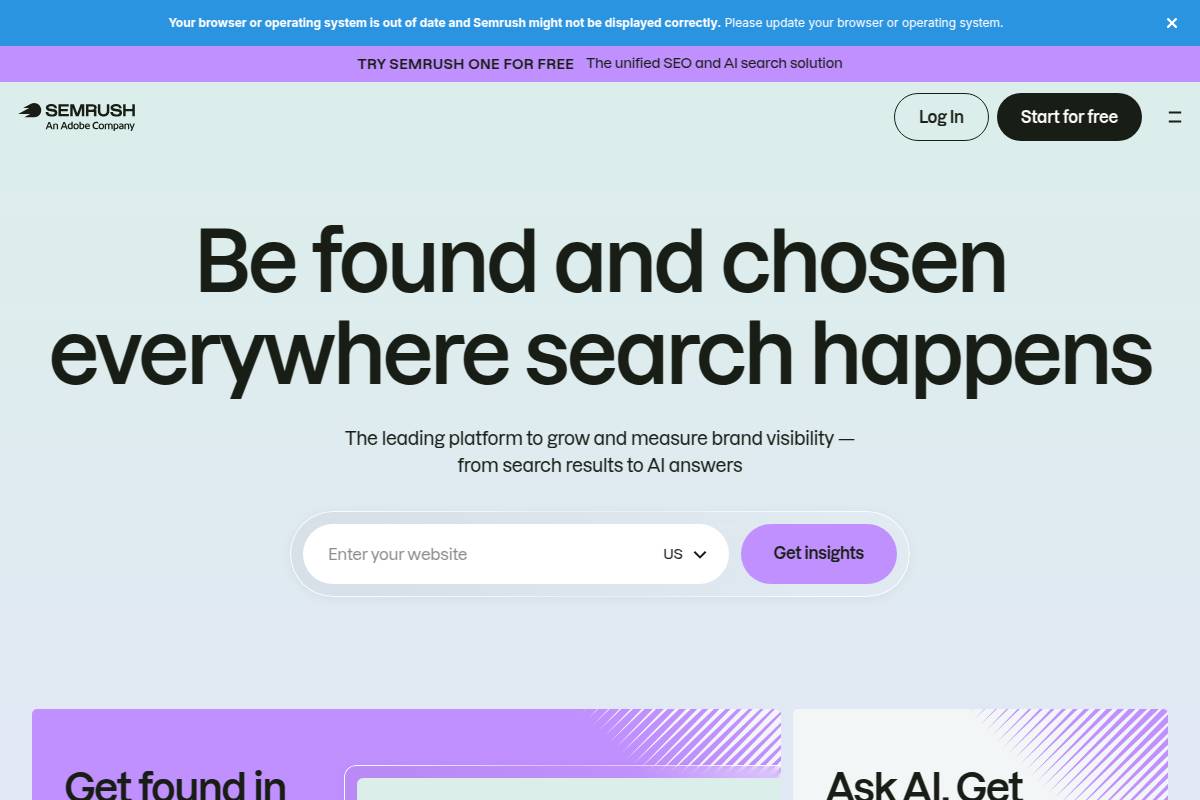
Semrush is an SEO platform whose keyword tools, including the Keyword Magic Tool and Keyword Overview, show volume, difficulty and intent alongside competitor and rank-tracking data.
Key Features
- Keyword Magic Tool: Expands one seed into grouped keyword ideas and questions.
- Difficulty and intent: Labels each term so you can filter quickly.
- Competitor gaps: Shows keywords rivals rank for and you don't.
- Price: A free account allows 10 reports a day; the SEO plan is $139 a month billed monthly.
Best For
Marketing teams and agencies that want keyword research, tracking and competitor analysis in one tool.
Pros and Cons
- Pro: Very broad feature set.
- Pro: Free account is useful for occasional checks.
- Con: Paid plans are expensive for small sites.
- Con: The number of features takes time to learn.
Rating: 9.0/10 If difficulty data matters more to you than breadth, Ahrefs is the next one to look at.
2. Ahrefs: Best for Keyword Difficulty and Traffic Potential
2. Ahrefs: Best for Keyword Difficulty and Traffic Potential
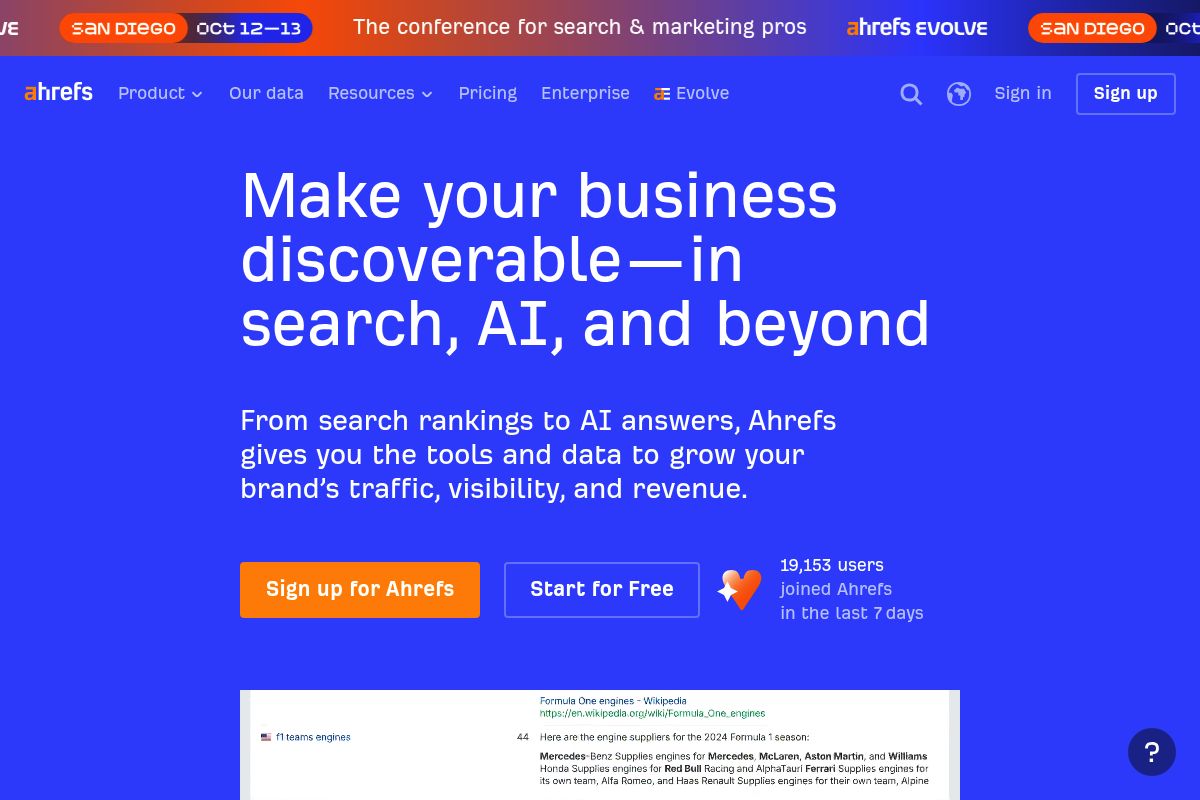
Ahrefs is an SEO platform whose Keywords Explorer estimates volume, keyword difficulty and the total traffic a top-ranking page could earn.
Key Features
- Keywords Explorer: Volume, difficulty, parent topic and traffic potential for each term.
- SERP overview: Shows the backlinks and traffic of pages that already rank.
- Free option: The free Keyword Generator gives a limited set of ideas without an account.
- Price: Lite is $129 a month; a Starter plan is $29 a month.
Best For
SEO specialists who want to judge how hard a keyword really is before writing.
Pros and Cons
- Pro: Strong difficulty and traffic-potential data.
- Pro: Free generator for quick ideas.
- Con: Full access needs the higher plans.
- Con: Less suited to beginners.
Rating: 8.9/10 For teams that care most about tracking what they research, SE Ranking is worth a look.
3. SE Ranking: Best for Keyword Research Plus Daily Rank Tracking
3. SE Ranking: Best for Keyword Research Plus Daily Rank Tracking
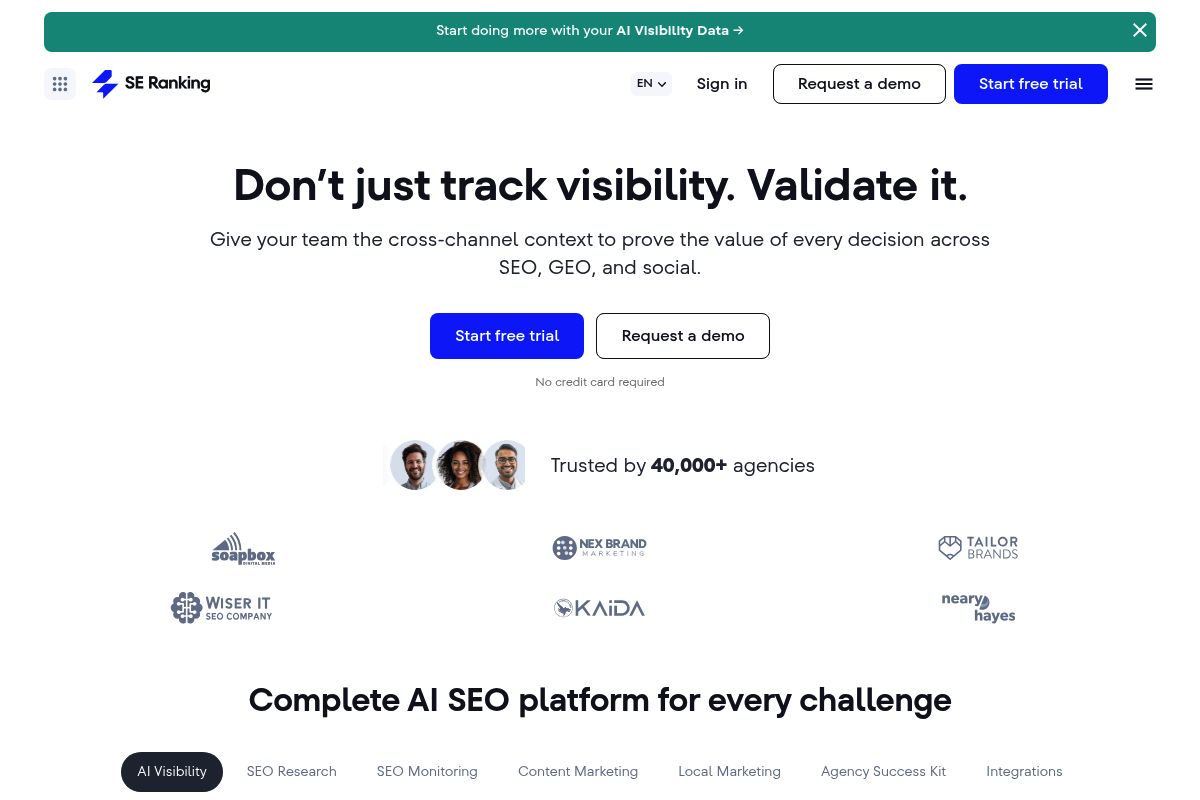
SE Ranking is an SEO platform that combines keyword research with daily rank tracking, site audits and competitor analysis.
Key Features
- Keyword research: Volume, difficulty and related terms.
- Rank tracking: Core tracks 2,000 keywords daily across 10 projects.
- Site audit: Up to 250,000 pages a month on Core.
- Price: 14-day free trial; Core is $129 a month and Growth $279 a month.
Best For
Agencies and in-house teams that want to research keywords and track them in the same place.
Pros and Cons
- Pro: Generous tracking limits.
- Pro: Free trial with no card required.
- Con: Smaller keyword database than the largest platforms.
- Con: AI search features cost extra.
Rating: 8.4/10 If none of these paid plans fit your budget yet, Google's free tools cover a surprising amount.
4. Google Keyword Planner: Best for Keyword Ideas From Google
4. Google Keyword Planner: Best for Keyword Ideas From Google
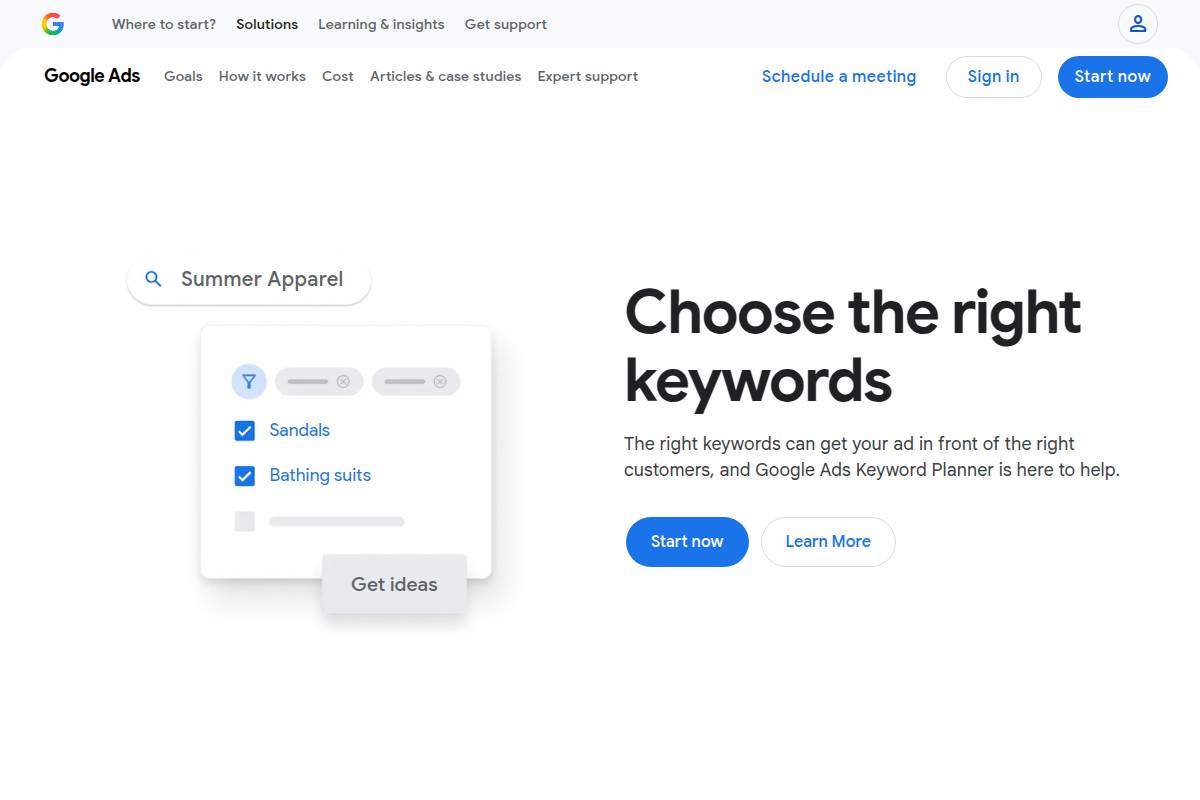
Google Keyword Planner is a free tool inside Google Ads that suggests keywords and shows search volume and competition data for advertisers.
Key Features
- Keyword ideas: From a seed term or a website URL.
- Volume data: Monthly search estimates, often shown as ranges for accounts without active ad spend.
- Forecasts: Expected clicks and costs for paid campaigns.
- Price: Free with a Google Ads account.
Best For
Anyone who wants keyword ideas straight from Google at no cost.
Pros and Cons
- Pro: Data comes from Google.
- Pro: Free.
- Con: Volume ranges can be broad.
- Con: Built for ads, so there's no SEO difficulty score.
Rating: 8.2/10 Planner shows what you could target; Search Console shows what you already rank for.
5. Google Search Console: Best for Keywords You Already Rank For
5. Google Search Console: Best for Keywords You Already Rank For
Google Search Console is Google's free tool for site owners, and its Performance report shows the real queries that bring people to your site.
Key Features
- Query data: Clicks, impressions, click-through rate and average position per query.
- Page filters: See which queries each page ranks for.
- History: Up to 16 months of performance data.
- Price: Free.
Best For
Finding quick wins: queries where you rank on page two and could move up.
Pros and Cons
- Pro: First-party data for your own site.
- Pro: Free and reliable.
- Con: Only shows keywords you already appear for.
- Con: No competitor data.
Rating: 8.8/10 To time content around demand, add Google Trends to the mix.
6. Google Trends: Best for Seasonality and Rising Topics
6. Google Trends: Best for Seasonality and Rising Topics
Google Trends is a free Google tool that shows how interest in a search term changes over time and by region, on a relative scale from 0 to 100.
Key Features
- Interest over time: Spot seasonal peaks before they happen.
- Comparisons: Compare up to five terms side by side.
- Rising queries: Find related searches that are growing fast.
- Price: Free.
Best For
Timing content and choosing between similar terms.
Pros and Cons
- Pro: Great for seasonality.
- Pro: Free with no account needed.
- Con: Relative interest only, no absolute volume.
- Con: Little data for small niche terms.
Rating: 7.8/10 Those free and paid tools cover Google searches, but AI prompts need a different approach.
Researching the Questions People Ask AI Engines
Keyword tools measure what people type into Google, but plenty of people now skip the search box and ask ChatGPT, Perplexity or Gemini a full question instead. Those prompts are longer and rarely show up in volume data, so they need a different kind of research.
- Generate likely prompts: hyperank's free AI search query generator suggests questions people may ask AI engines about a topic.
- See the sub-queries: The query fan-out generator shows the related searches an AI engine may run behind one question.
- Track the answers: Check which brands AI engines mention for those prompts.
These tools don't provide search volume; they're for AI-question research. For tracking, hyperank believes that understanding and influencing how AI engines perceive and represent your brand is critical in the new digital landscape, and it positions itself as the essential tool for brands wanting transparency and control over their AI-driven reputation. hyperank helps brands 'see what AI says about your brand' by aggregating and displaying daily insights from six major AI engines. Unlike traditional brand monitoring tools, hyperank captures qualitative answers and trends, not just rankings, so you always know how your brand stacks up, what needs attention, and what AI gets right or wrong.
How to Choose a Keyword Tool
| Situation | Start with | Why |
|---|---|---|
| No budget | Search Console, Keyword Planner, Trends | Covers rankings, ideas and seasonality for free |
| Small team, occasional research | Semrush free account or Ahrefs Keyword Generator | Paid-tool data without a subscription |
| Agency or in-house SEO team | Semrush, Ahrefs or SE Ranking | Difficulty, competitor data and tracking at scale |
| Brand worried about AI answers | A keyword tool plus hyperank's AI query tools | Covers both Google searches and AI prompts |
For most teams, the best keyword search tool is a combination: Search Console for what you already rank for, plus one paid tool for new ideas and difficulty.
FAQ
How do you do an SEO keyword analysis, and what are the best free and paid keyword tools?
List seed topics, expand them into keywords with a tool, check volume, difficulty and intent, review the results page, then prioritize terms and map each to one page. Good free options are Google Keyword Planner, Google Search Console and Google Trends; leading paid keyword tools include Semrush (from $139 a month), Ahrefs (Lite from $129 a month) and SE Ranking (Core from $129 a month), as listed in October 2026.
What does SEO Keyword Analysis: How to Do It and the Best Free and Paid Keyword Tools cover?
It covers what a keyword analysis tells you, a five-step process, three paid and three free keyword tools, AI-question research and how to choose.
What is the best free keyword analysis tool?
Google Search Console is the best free source for keywords you already rank for, and Google Keyword Planner is the best free source of new ideas.
What is keyword difficulty?
A score estimating how hard it is to reach the top results for a term, usually based on the authority and backlinks of pages already ranking.
How many keywords should one page target?
One main keyword plus closely related variants with the same intent. Different intents usually need separate pages.
Can keyword tools show what people ask ChatGPT?
Not directly. Keyword tools measure search engine queries; AI prompts need separate research, such as query generators and AI answer tracking.
Methodology: We reviewed each tool's keyword features and checked pricing on the vendors' official pricing pages in October 2026. Prices are monthly billing in US dollars and can change; check the vendor's site before buying. Ratings reflect usefulness for keyword analysis specifically.
See where your brand stands
How six AI engines describe you, next to your competitors. About two minutes.